Software, automation and data, delivered as one engagement
We help small and mid-sized businesses build the systems they can't buy off the shelf: internal tools, automations, portals, dashboards, and the secure cloud underneath them. One team, one invoice, one point of contact — and everything we build stays in your name.
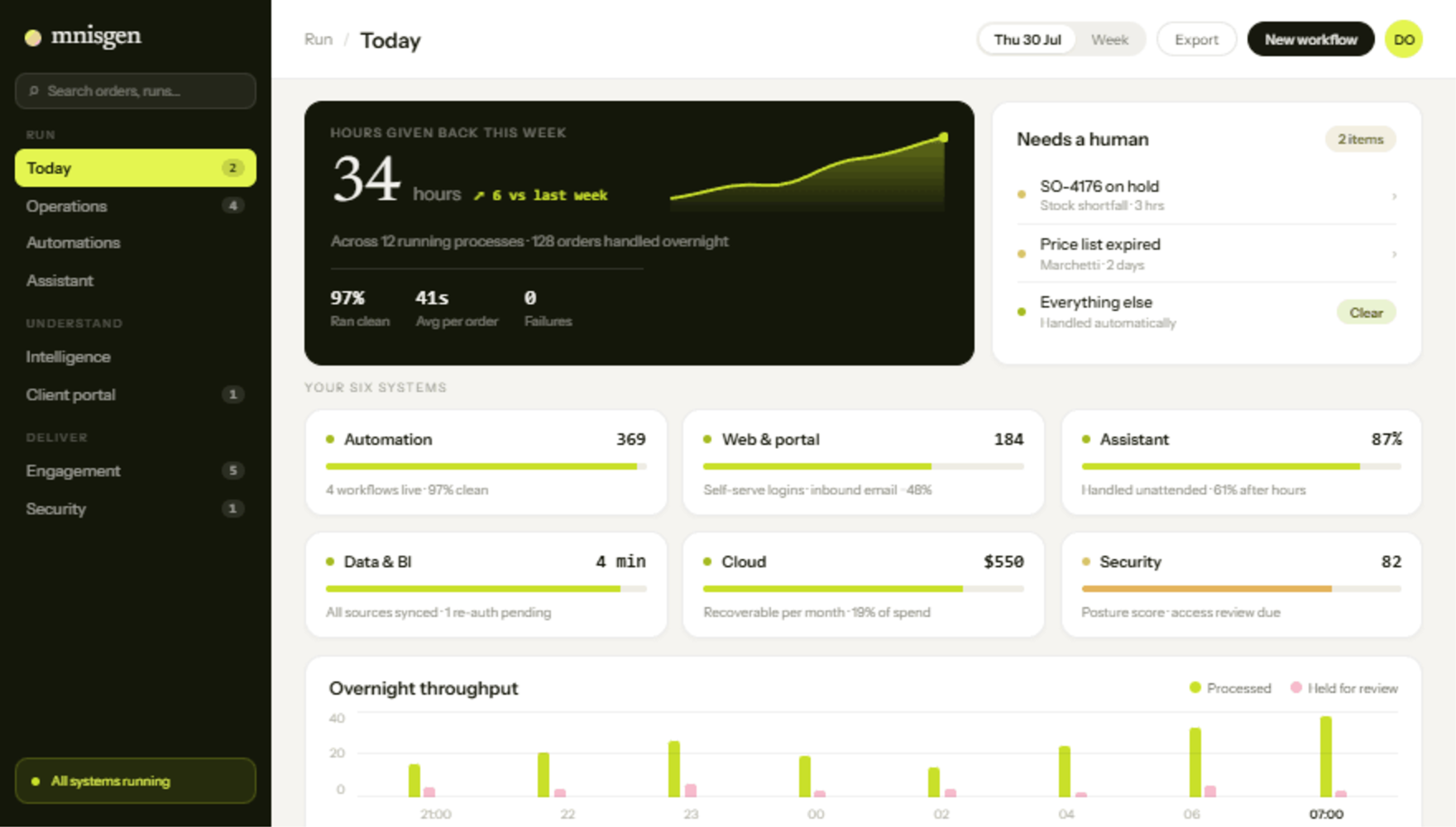
Our engineers work across automation, application development, data and cloud infrastructure. We use ordinary, well-supported technology and design every system to be secure, observable and maintainable by the people who inherit it.
Team augmentation
We add senior engineers to the team you already have, so you can move faster without a hiring round.
Outsourced engineering
We take full responsibility for a system — build, run and support it — so your team can stay on the business.
Project-based work
A defined scope with a fixed price and a date: one workflow automated, one portal launched, one migration done.
Whichever shape it takes, the work is the same: understand how the business actually runs, remove the steps nobody should be doing by hand, and hand back something documented that your team can change without us.
We are experts in
Business process automation
Most small companies don't have a technology problem. They have eleven tools that don't talk to each other, and a team quietly compensating for it with copy-paste, re-typing and reminders in their heads.
We map the process end to end first — following one real order, ticket or invoice from the first email to the final payment, timing every manual step. Then we automate the steps nobody should be doing by hand and leave a clear path for the ones that still need judgement.
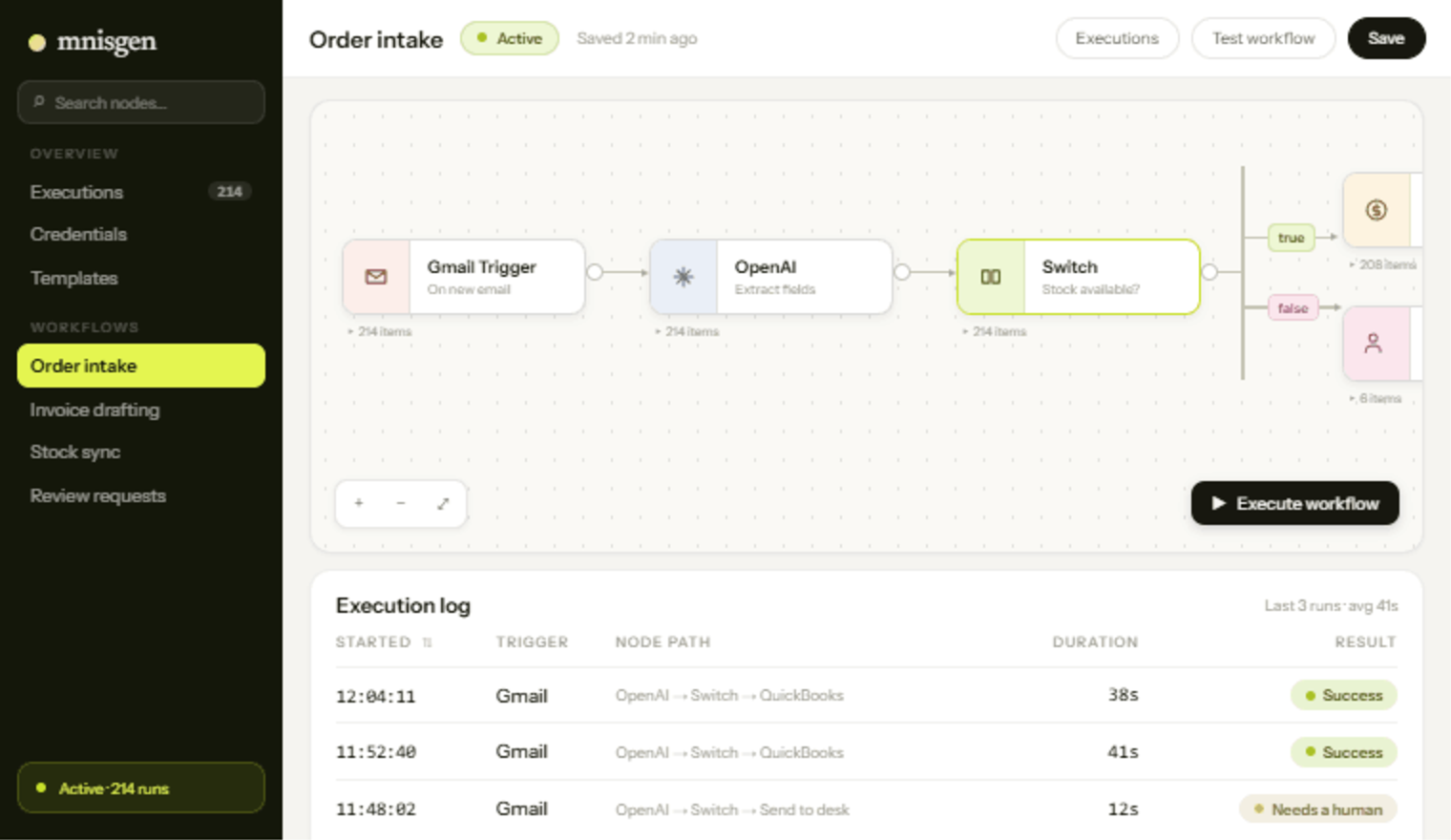
Typical work in this service line:
- Custom internal tools and dashboards
- Workflow automation across Zapier, Make or direct APIs
- Legacy desktop software rebuilt as secure web apps
- Exception handling that routes edge cases to a human
What makes us different?
Every engagement is a working relationship rather than a handover. The result depends on both sides, so we set it up that way from week one.
A working partnership
The people in your kickoff are the people writing the code. No account layer in between.
Time is the metric
We measure a project by the hours it removes from someone's week, not the features shipped.
Secure and observable by default
Access control, backups and monitoring are part of the build, not a later phase.
Documented handover
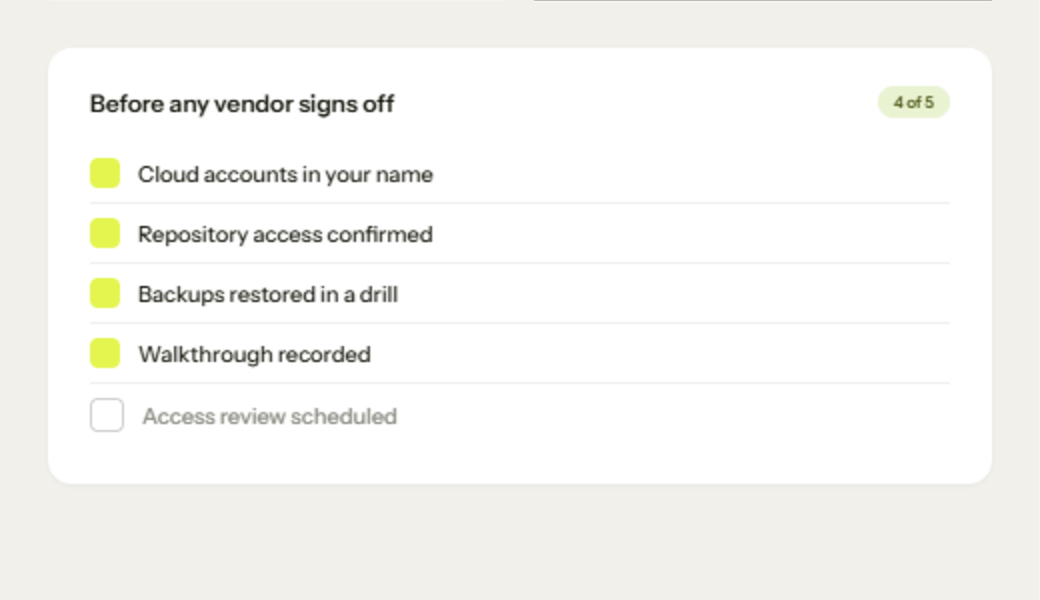
A runbook, admin access and a recorded walkthrough. Support continues only if you want it.
No lock-in, ever
Standard tools in accounts you own. You can take the work elsewhere the day after we finish.
Flexible engagement
Start with one project, move to a retainer, or drop to managed care when the building is done.
If you're looking for a partner to build the systems your business runs on — and to leave you able to run them — start with a conversation. Thirty minutes is usually enough to know whether it's a fit.
Got questions? We have answers.
Project work is quoted as a fixed price once the scope is clear. Ongoing work runs as a monthly retainer sized to how much building you want each month, cancellable with 30 days' notice. Either way you see the number before we start.
No. Most engagements start with one problem — usually an automation or a portal — and grow only if it's worth it. The advantage of the six is that when the next thing touches data or security, the same team already knows your systems.
You do, from day one. Repositories, cloud accounts and domains are created in your name, and the handover includes admin access plus a written runbook and a recorded walkthrough.
Often, yes. We handle software, data and automation; they keep hardware, network and helpdesk. We agree the boundary in writing in week one so nothing falls between the two of us.
Two weeks to map and quote, then most first builds go live in four to eight weeks with weekly releases you can use as they land. Migrations and compliance work run longer because the testing does.
Nothing, if you want it that way — the system is documented and yours. If you'd rather not carry it, managed care covers monitoring, backups, patching and a small allowance of changes each month.
Notes from the work
All articles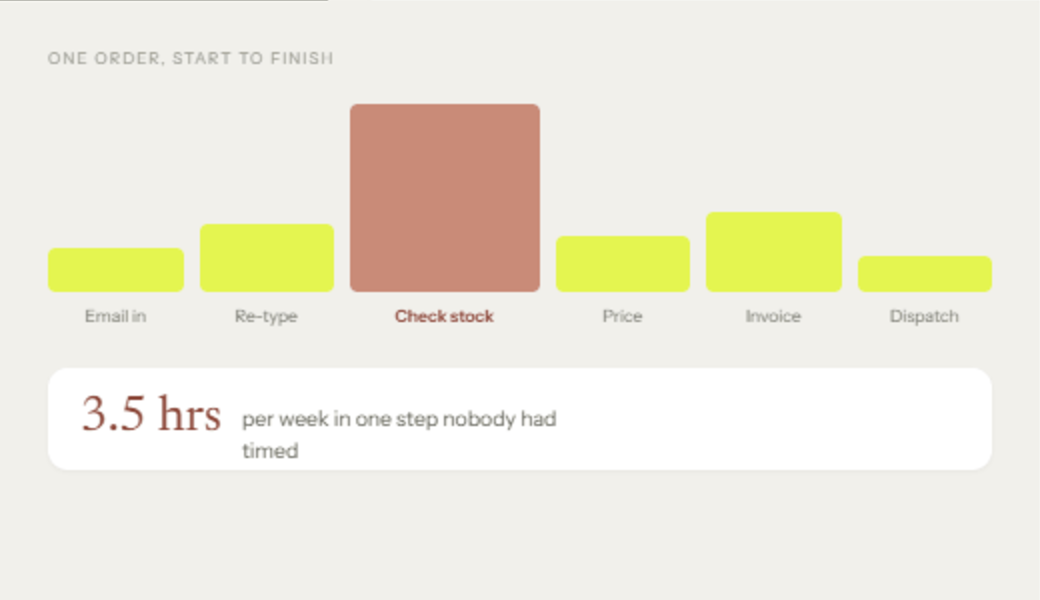
Tell us the process that costs you the most time
We'll reply with what could be automated this quarter, roughly what it takes, and what it would cost. One reply from a person who could do the work.